


 zinzino.com




What’s on the plate?
The marine Omega-3 are essential for children’s health and development. Starting from the time in the mother's womb, through adolescence, and well into adulthood – these essential fatty acids are needed in every cell in our body. Since marine Omega-3 fatty acids are so important to children’s development, nutritional recommendations worldwide place extra emphasis on ensuring its consumption. Still, only a small minority of children get enough quality seafood in their diet.

DHA (docosahexaenoic acid), along with EPA (eicosapentaenoic acid) are the two most nutritionally important Omega-3 fatty acids. These specialized fatty acids promote normal growth and development in children such as eye and brain development and numerous other health benefits. Both fatty acids are required in different quantities, but are equally important, as they work together in a complex process.
The best sources of marine Omega-3 are salmon, mackerel, tuna, and herring, and seafood is generally associated with good health. To ensure we get enough nutrients, most European dietary guidelines for food include (a minimum of) two servings of fish per week for children & adolescents.
BalanceOil is an omega balance food supplement with polyphenols (antioxidants), and Vitamin D. It contains nourishing levels of marine omega-3 EPA and DHA, to support a normal healthy brain development and immune system in children. Thanks to the high antioxidant content, each serving ensures the delivery of a clinically significant dose of essential fatty acids, and is based on the child's individual body weight (0.20 ml per kilo body weight).
Although food is the preferred option, consuming 2-3 servings of fish a week can be difficult for young children. Therefore, supplementation with fish oil is increasingly highlighted as a reasonable way to fill the gaps of children’s dietary needs, especially if it is guided by a biomarker-based personalized approach.
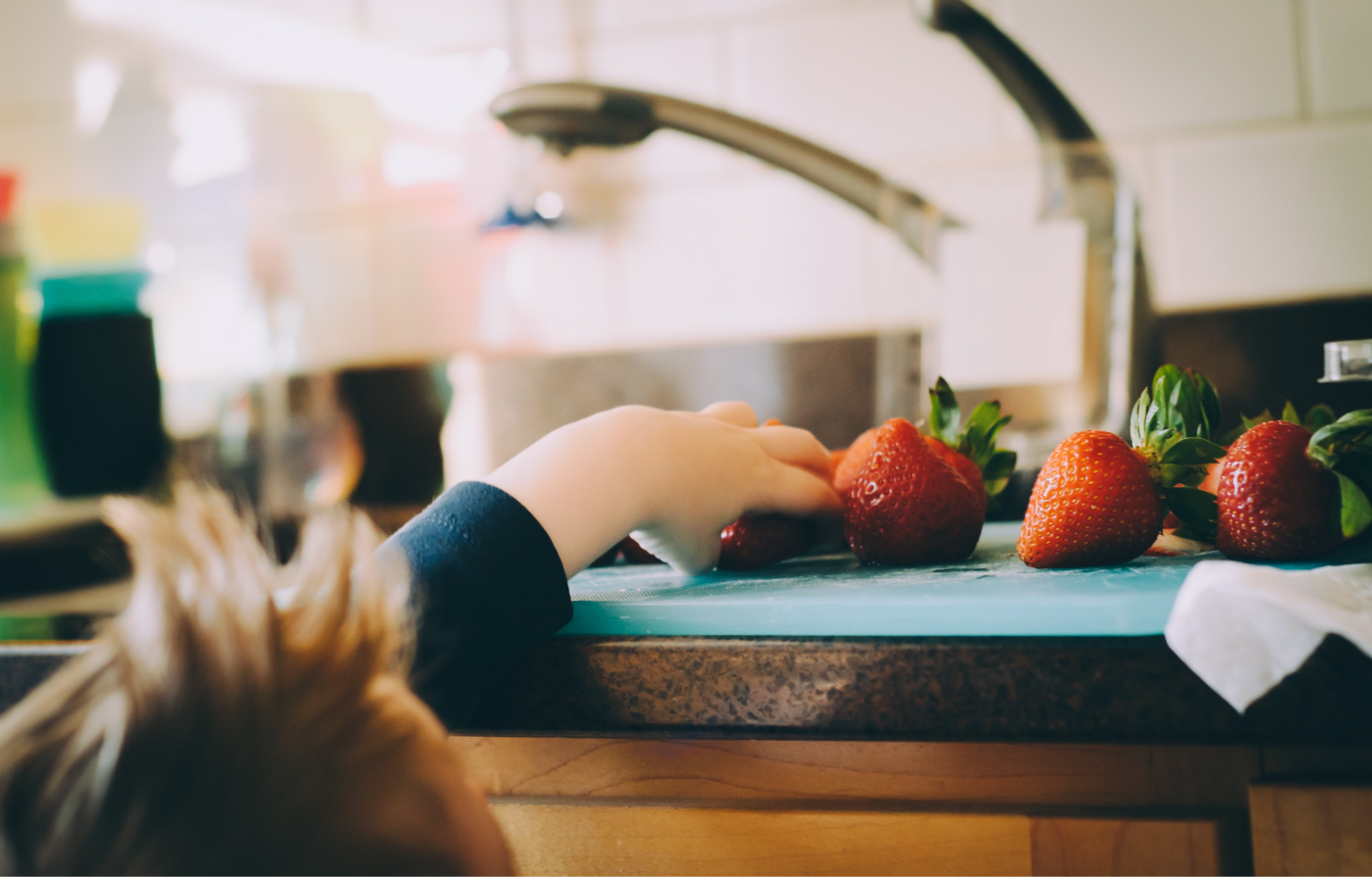
Is there a fuzzy eater at your table too?
Good habits start early on in life. When helping your child to try new foods, there are many tricks and techniques to play with.
Children are born with a skepticism for new food, something that is called neophobia. Your child’s suspicious mind is basic self-preservation and this is a perfectly healthy instinct. For example, what if you were asked to taste two unidentified pieces of food. You are being told that one of the two is not edible and potentially toxic and you have to find out which one you can eat. How would you proceed? Chances are you would inspect the pieces closely, pick them up, smell them, and maybe take a tiny nibble, since this first encounter will naturally make you feel anxious. This is the same for your child. This perfectly healthy and sound response is why offering large tasting portions to your child is a mistake and might discourage him/her to try new foods. Most experts will therefore tell you to offer pieces that are so small they can literally be blown off the child's finger.
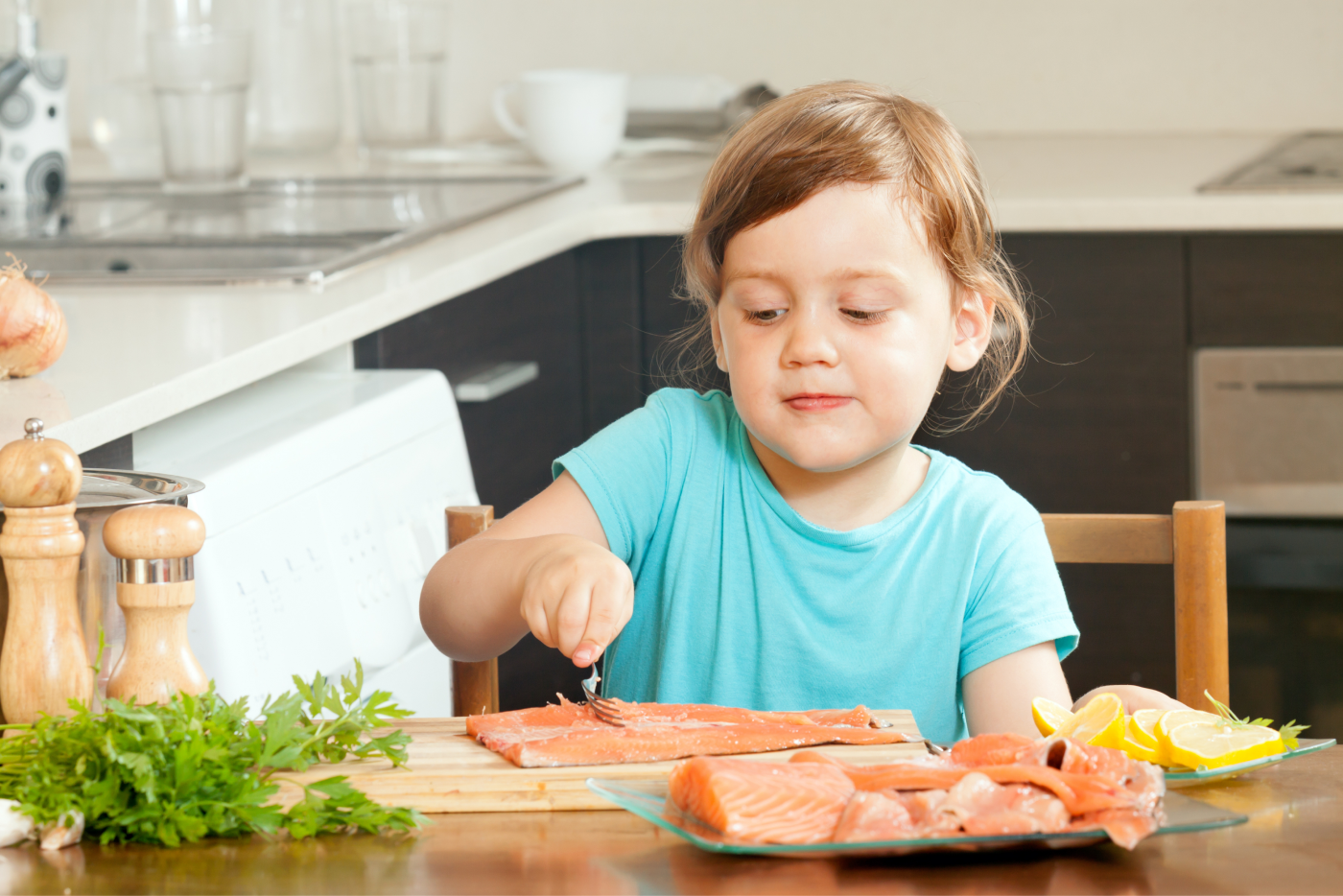
More tips: Offer a piece of fish the size of a fingernail. Encourage your child by saying something like: "This is easy. You can do it in a second!" When your child has tried the fish nibble, immediately serve another piece of food that you know your child likes. At subsequent meals, gradually increase the size of the fish and phase out the favorite food you offer afterwards.
For good health, try to include at least one rich source of marine Omega-3 fats with your child's meal every day. (This really goes for ourselves too). Aim for a serving of fatty fish such as fish tacos, tuna fish sandwiches, or salmon patties. Some foods are fortified with DHA but not fortified with EPA. We need both kinds!
- Small bites followed by a favorite piece of other food
- Positive reinforcement only! Even if it's just to encourage the child for “almost trying”!
- Rename the fish dish to something more funny/quirky/intriguing than plain “fish and potatoes”
- Always let your kid touch and feel all new food on the plate
- It takes at least 14 separate tasting sessions to reprogram the brain to start liking rejected food
- Try fun fish food such as fish tacos, tuna fish sandwiches, or salmon patties